How to choose tile for a Huntington Beach bathroom remodel
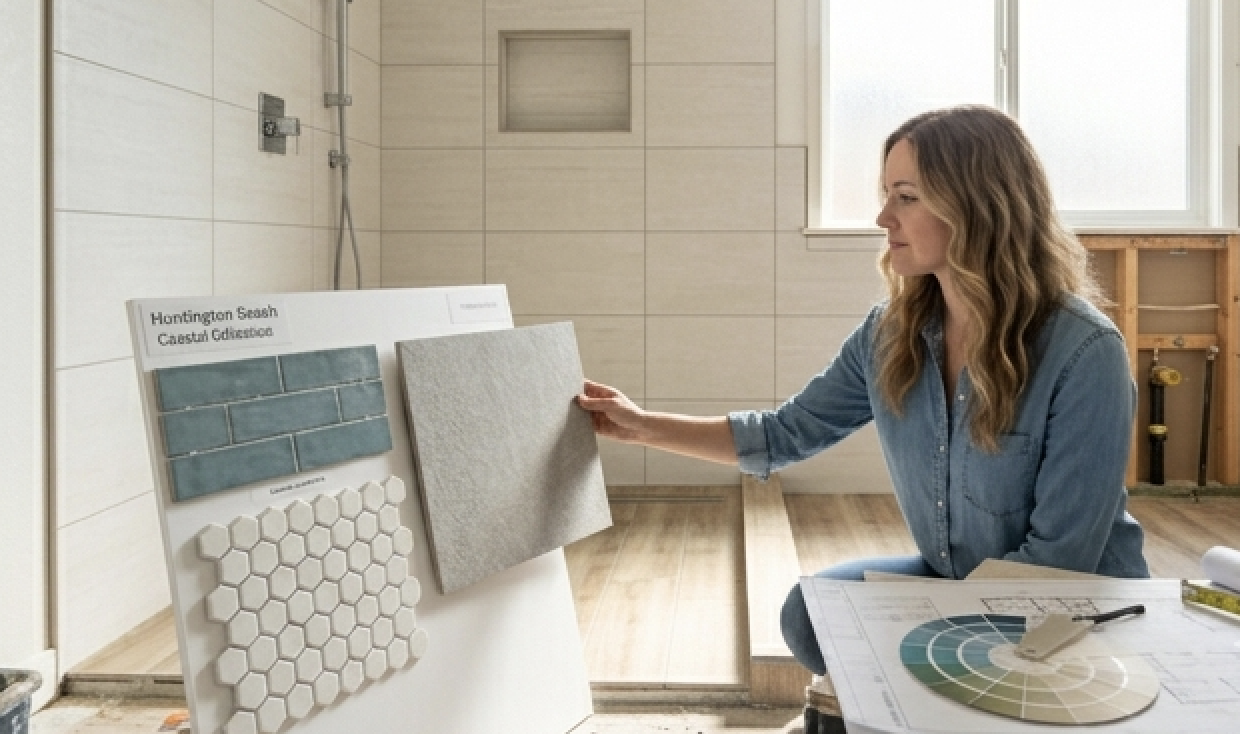
Tile selection is one of the decisions that looks simple at first but usually ends up affecting the entire project. It changes how the bathroom feels, how easy it is to maintain, and how well the space holds up over time.
In many remodels, once demolition starts, we find uneven walls, small framing inconsistencies, or areas that need to be corrected before tile can be installed properly. That part is not visible in the finished bathroom, but it affects how everything lines up.
Start by separating wall tile and floor tile
One of the most common mistakes is trying to use the same tile everywhere. Wall tile and floor tile serve different purposes.
Wall tile is mostly visual. It sets the tone of the room and affects how clean or busy the space feels.
Floor tile needs to handle water, foot traffic, and daily use. In most cases, that means choosing a matte or lightly textured surface instead of something glossy.
Think about tile size based on the room
Tile size changes how the room reads. In smaller bathrooms, too many grout lines can make the space feel broken up. Larger tile can help simplify the look.
At the same time, very large tile does not work in every layout. Tight spaces, corners, and plumbing locations sometimes require smaller formats to avoid excessive cuts.
Good tile planning usually means adjusting the size to the room, not copying what looks good in a showroom.
Grout color has a bigger impact than expected
Grout is often treated as a small detail, but it can completely change the final look.
Matching grout keeps the surface calm and continuous. High-contrast grout highlights every line and makes the pattern more visible.
From a maintenance standpoint, very light grout can stain, and very dark grout can show residue. Most homeowners end up somewhere in the middle once they see real examples.
Porcelain is usually the most practical option
Porcelain tile is widely used because it works well in both walls and floors and holds up under moisture.
It also gives flexibility in design. There are stone looks, concrete looks, and warmer neutral finishes that fit most bathrooms without requiring special maintenance.
That does not mean using one tile everywhere. A simple combination of wall tile, floor tile, and a small accent usually works better than mixing too many materials.
Use accent tile carefully
Accent tile can work well, but it is easy to overdo.
In most bathrooms, a niche or one wall is enough. Covering the entire space with strong patterns can make the room feel busy and harder to update later.
Keeping the main surfaces simple gives more flexibility if finishes need to change over time.
Make sure the floor is not slippery
This is one of the most overlooked issues.
Some tiles look good in samples but become slippery when wet. That becomes a problem in daily use.
Matte or lightly textured tile is usually a safer option, especially in smaller bathrooms or shared spaces.
Tile should work with the rest of the room
Tile is only one part of the bathroom. It needs to work with the vanity, lighting, fixtures, and paint.
When everything is chosen separately, the result can feel mismatched. A simpler, more consistent palette usually looks better once the project is complete.
Plan for maintenance from the start
Maintenance is often ignored early on and becomes an issue later.
More grout lines mean more cleaning. High contrast surfaces show wear faster. Some finishes require more upkeep than others.
Choosing tile with maintenance in mind usually leads to a better long-term result.
For homeowners comparing different surface materials, finish durability, and long-term upkeep, resources like Cherry Block Butcher can also be useful when thinking about how natural materials age, wear, and require maintenance over time.
Final thoughts
The best tile choice is not the most dramatic one. It is the one that fits the space and holds up with daily use.
Most bathrooms look better when the tile plan is simple, balanced, and based on how the room is actually used.
Even with careful planning, some adjustments happen once work begins. That is normal, and it is part of getting a clean final result.